A dripping pipe under the sink rarely looks like an emergency. Neither does a small stain on the ceiling or a musty smell in the basement. But home water damage restoration is often needed long before homeowners realize it, because water moves fast, soaks into materials you cannot see, and creates conditions for mold within a day or two. If you live anywhere in Middle Tennessee, from Columbia to Franklin to Spring Hill, knowing the early warning signs can save you thousands of dollars in repairs and protect your family from health risks tied to hidden moisture.
According to the Insurance Information Institute, water damage and freezing are among the most common causes of homeowners insurance claims in the country, and Tennessee homes are especially exposed because of heavy spring storms, aging plumbing in older neighborhoods, and humid summers that slow natural drying. This guide breaks down the real signs that point to a serious problem, what separates a simple mop up job from true professional restoration, and when it makes sense to call a licensed team like AMC Restoration instead of handling it yourself.
Common Causes of Water Damage in Tennessee Homes
Before you can spot the warning signs, it helps to understand where the water is usually coming from. Most calls for water damage restoration in Middle Tennessee trace back to one of these sources.
- Burst or slowly leaking pipes, especially in homes built before modern plumbing codes
- Water heater failures that release dozens of gallons at once
- Roof leaks following hail or wind damage from spring and summer storms
- Washing machine and dishwasher hose failures
- Foundation seepage during periods of heavy rain
- Clogged gutters that push water toward the foundation instead of away from it
- HVAC condensation lines that back up in the attic or crawl space
Any one of these can turn into a much larger issue if it goes unnoticed for even a few days.
Signs You Need Home Water Damage Restoration
Water damage does not always announce itself with a flood. Often the signs are quiet, and homeowners miss them until the damage has already spread through drywall, subfloor, or insulation. Watch for these indicators.
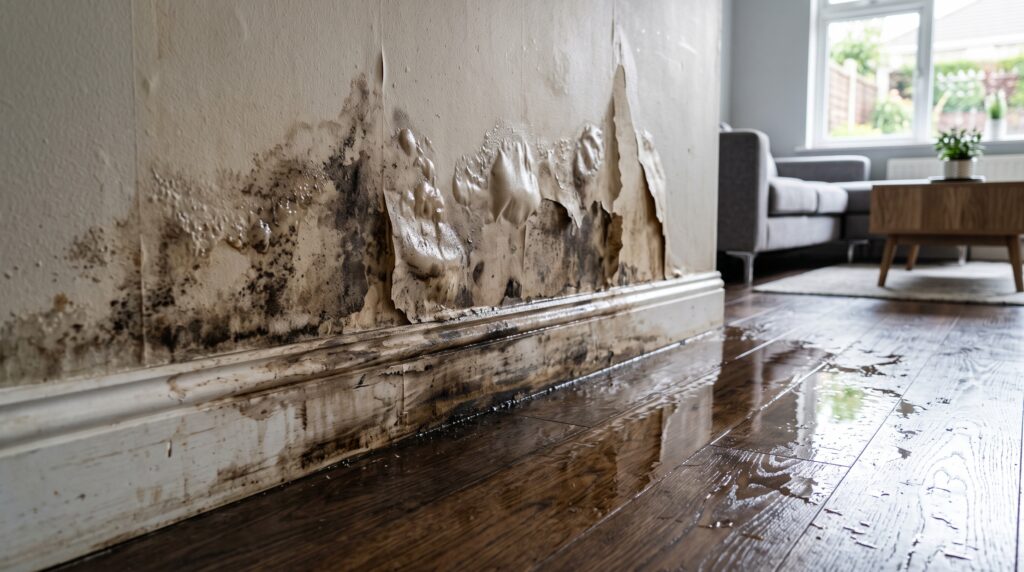
- Discoloration or yellowish rings on ceilings and walls
- Paint or wallpaper that is bubbling, peeling, or feels soft to the touch
- Warped, cupped, or spongy flooring, especially near exterior walls
- A musty or earthy smell that does not go away with cleaning
- Higher than normal water bills with no obvious explanation
- Visible mold spots, particularly in bathrooms, basements, and closets
- Rusting or corrosion around pipe fittings and appliances
- A sudden spike in humidity inside rooms that are usually dry
If you notice two or more of these signs at once, it is a strong indication that professional water damage restoration is needed rather than a surface level fix.
The core issue with DIY cleanup is that surface drying does not remove moisture trapped inside walls or under flooring. A homeowner may believe the problem is solved while moisture continues to sit inside the structure, quietly feeding mold growth. The EPA notes that mold can begin growing within 24 to 48 hours once materials stay wet, which is exactly why fast, thorough drying matters more than it seems at first glance.
What Happens During Professional Restoration
A licensed restoration company follows a structured process rather than guesswork, often based on standards set by the IICRC, the certifying body for the restoration industry. Here is what a typical water damage restoration project involves.
- Emergency response and inspection. A technician assesses the source of the water, shuts it off if needed, and identifies which materials are affected.
- Water extraction. Industrial pumps and vacuums remove standing water quickly, before it spreads further into the structure.
- Drying and dehumidification. Commercial air movers and dehumidifiers pull moisture out of walls, floors, and subfloor cavities over several days.
- Cleaning and sanitizing. Affected surfaces are treated to prevent bacteria and mold from taking hold.
- Repair and reconstruction. Damaged drywall, flooring, or trim is replaced to bring the home back to its original condition.
This is the same process behind AMC Restoration’s water damage leakage restoration service, which pairs fast extraction with structural drying so moisture does not linger where you cannot see it.
DIY Cleanup vs Professional Water Damage Restoration
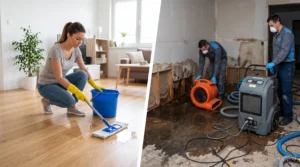
Many homeowners try to handle small leaks on their own, and that is fine for a quick spill. The difference becomes clear once water has soaked into building materials.
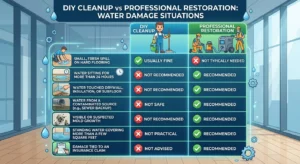
The core issue with DIY cleanup is that surface drying does not remove moisture trapped inside walls or under flooring. A homeowner may believe the problem is solved while moisture continues to sit inside the structure, quietly feeding mold growth.
Why Timing Matters More Than Most Homeowners Think
The first 24 to 48 hours after water intrusion are the most important window for preventing long term damage. Waiting even a day or two longer can turn a manageable drying job into a full mold remediation project, which is far more expensive and disruptive. This is one of the biggest reasons homeowners are encouraged to call for water damage restoration the moment they suspect a problem, rather than waiting to see if it gets worse on its own.
Tennessee’s climate adds another layer of urgency. Humid summers slow natural evaporation, so wet materials that might dry out in a drier climate can stay damp for days here. That extended moisture window is exactly when mold spores start to establish themselves.
Storm Season and Water Damage Risk in Tennessee
Middle Tennessee sees a mix of severe spring storms, flash flooding, and summer downpours that can overwhelm roofs, gutters, and foundations. The Tennessee Emergency Management Agency regularly issues flood and severe weather alerts throughout the year, and Ready.gov recommends that homeowners inspect their property after any major storm, even if no obvious damage is visible from the outside.
If your home has recently been through a storm, it is worth checking attics, crawl spaces, and areas around windows for early moisture signs. AMC Restoration’s storm damage restoration team frequently finds hidden water intrusion in homes that looked fine from the street.
Water Damage and Your Homeowners Insurance
Not all water damage is treated the same way by insurance providers. Sudden and accidental events, such as a burst pipe or an appliance failure, are typically covered under a standard homeowners policy. Flooding from rising water, on the other hand, usually requires separate flood insurance. Understanding this difference before disaster strikes can save you from an unpleasant surprise during a claim.
Working with a company that documents damage properly, using photos, moisture readings, and detailed reports, makes the insurance claims process far smoother for homeowners.
Why Homeowners Across Middle Tennessee Choose AMC Restoration
AMC Restoration handles the full range of property damage, not just water intrusion. Depending on what your home needs, the team also provides:
- 24/7 emergency restoration response for urgent situations
- Structural drying and mitigation to stop moisture before mold sets in
- Fire and smoke damage restoration for homes affected by both fire and the water used to fight it
- Reconstruction services once mitigation is complete
Homeowners in Franklin, Spring Hill, Columbia, and throughout Middle Tennessee call AMC Restoration because the team treats every job as a full recovery process rather than a quick patch. Learn more about AMC Restoration and how the team supports local families through every stage of a restoration project.
If you are seeing warning signs right now, do not wait for the damage to spread. Contact AMC Restoration or call 931 416 5131 for a fast assessment.
Frequently Asked Questions
Q: How do I know if I need home water damage restoration instead of just cleaning it up myself? A: If water sat for more than a day, touched drywall or flooring, or you smell mustiness, it likely needs professional drying, not just surface cleanup.
Q: What does water damage restoration usually cost for a typical Tennessee home?
A:Cost depends on the size of the affected area and water source. A licensed team can give an accurate estimate after an on site inspection of your home.
Q: How is water damage restoration different from mold remediation?
A: Water damage restoration focuses on removing moisture and drying materials, while mold remediation removes existing mold growth that moisture already caused.
Q: Does homeowners insurance cover home water damage restoration in Tennessee? A: Sudden events like burst pipes are usually covered, but slow leaks or flooding often are not without separate coverage. Check your policy details closely.
Q: How long does professional water damage restoration take to finish?
A: Extraction can happen the same day, but full drying typically takes three to five days, and repairs afterward depend on how much material was affected.
Final Thoughts
Water damage rarely looks dramatic in the beginning, which is exactly why so many homeowners underestimate it. A small stain, a faint smell, or a slightly soft patch of flooring can be the only visible clue that moisture is already working its way through your walls or subfloor. Acting on those early signs, rather than waiting for a bigger problem to appear, is what protects your home’s structure, your family’s health, and your budget. If you are in Middle Tennessee and noticing any of the warning signs covered here, reach out to AMC Restoration at 931 416 5131 for a fast, thorough assessment before a small issue turns into a major repair.